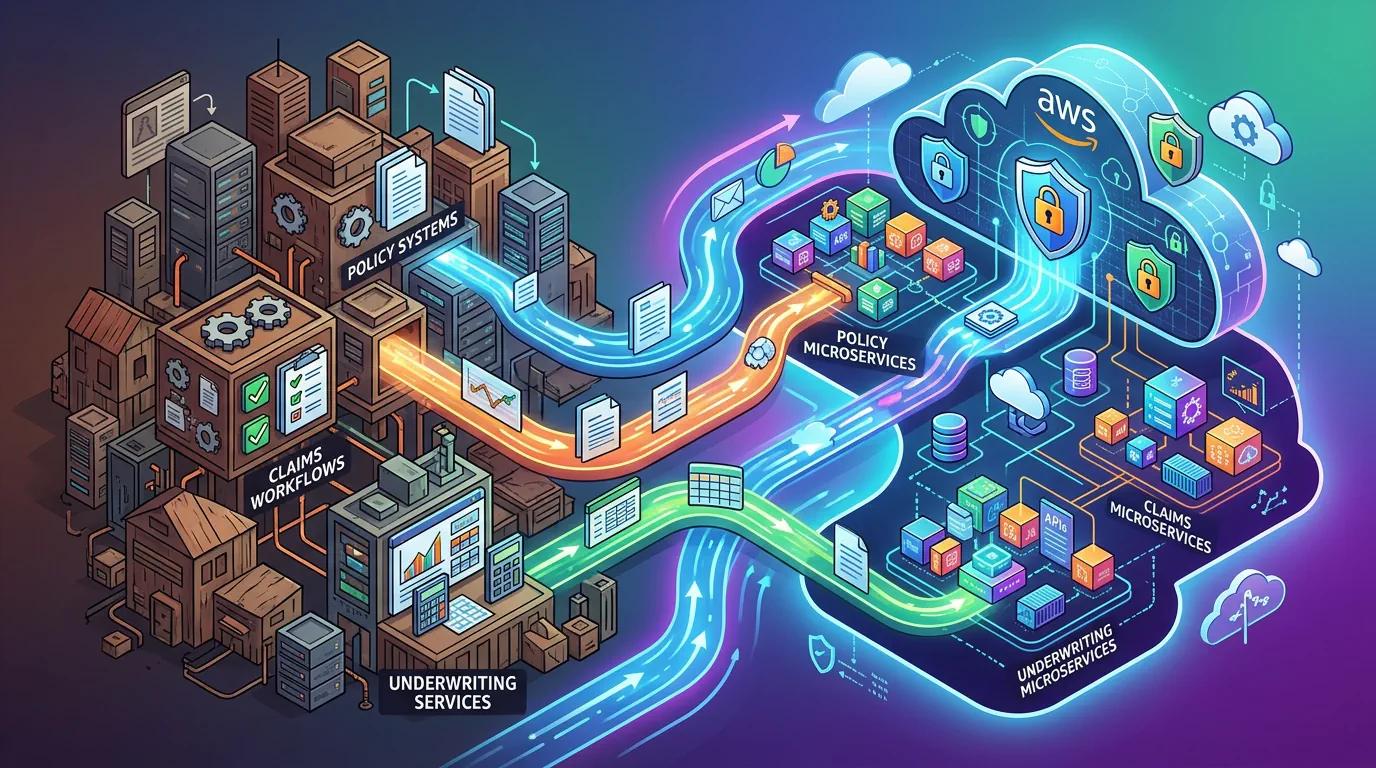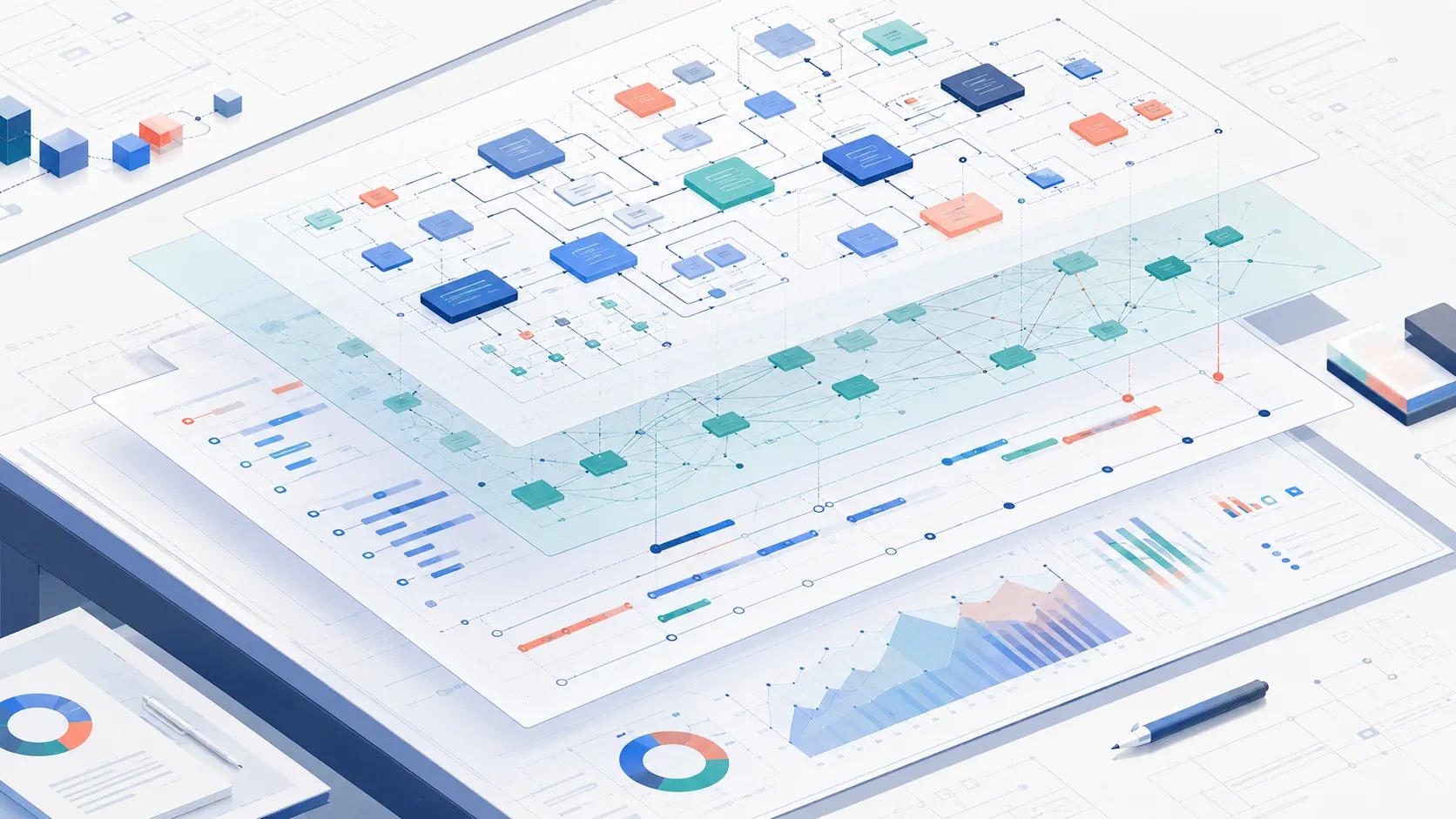
The Modernization Math
The modernization math, and why CTOs keep arriving at the same answer
Every CTO who has run a modernization program for a meaningful portfolio has done some version of the same calculation. The cost of carrying a legacy estate is high and the cost is rising. The cost of modernizing the estate is also high, and the timeline is long enough that the business case has to survive a CFO review against initiatives with faster payback. The math, when you actually run it, almost always favors modernization on a five-year horizon. The math also almost always loses on a one or two year horizon, which is the horizon most modernization programs are scoped against.
This is the central problem. Modernization is a strategically obvious investment with an operationally inconvenient timeline. Most programs respond by doing the cheapest possible version of each phase, which produces a current-state document that nobody trusts, a target state that nobody can defend, a business case that the finance team rebuilds from scratch, and a roadmap that gets renegotiated every quarter. The cumulative effect is that the program runs longer, costs more, and delivers less than the original case promised, which is exactly the failure pattern that justifies finance skepticism on the next program.
What actually changes the math is something different from a faster execution of any single phase. It is a way to make the phases consistent with each other so the program holds its credibility through delivery rather than losing it halfway through. That consistency is what an AI-native modernization platform contributes, and the rest of this article is about how to evaluate one.
Where the budget actually goes
The headline number is well known. Roughly 70 percent of enterprise IT budgets are consumed by maintenance of existing systems, which leaves the remainder to fund everything new. What is less appreciated is how that 70 percent is distributed inside a typical legacy estate.
A meaningful share of that maintenance spend is on systems that are not actually being used in any growth-relevant capacity. Another share is on systems whose maintenance cost is high specifically because nobody has a current map of how they work, which means every change is preceded by a discovery cycle that effectively re-pays the assessment cost over and over. A third share is on platform and infrastructure overhead that exists to keep the legacy estate running on hardware and operating systems whose support contracts are increasingly expensive, and in some cases no longer available at any price.
The first lever that any serious modernization program pulls is portfolio rationalization. Roughly 200 applications is the rough average size of an enterprise application portfolio. Of those, a meaningful percentage are candidates for retirement or consolidation rather than modernization. Identifying which ones requires a current state assessment that is honest, complete, and recent enough to be trusted, which is precisely the artifact that traditional modernization approaches struggle to produce.
Why modernization programs stall at assessment
Industry data is unambiguous on where modernization programs fail. Roughly 45 percent of cloud migration projects encounter material failure conditions during execution, and the most consistent root cause is poor legacy analysis at the assessment phase. Migrations that begin with a thorough readiness assessment have measurably higher success rates than those that do not. The CFO-facing implication is that the assessment phase deserves to be treated as the single most consequential investment in the program rather than as overhead.
The traditional approach to assessment is to put a team of architects against the codebase for three to six months. The cost is high, the consistency is low, and the output is a snapshot that is already aging the day it is delivered. By the time the business case is built on top of it, the underlying state has drifted, and the gap between what the assessment says and what the codebase actually contains becomes a source of program risk that nobody on the steering committee fully understands.
The AI-accelerated approach replaces the architect-hour bottleneck with a platform that ingests the entire estate and produces a structured representation of it in days rather than months. ArchWeaver completes a full analysis of up to a hundred applications in roughly thirty minutes of compute time, and the assessment artifact it produces is queryable rather than narrative. That distinction matters because a queryable assessment can be re-run when the estate changes, which means the assessment never becomes stale in the way that a static document inevitably does.
The numbers that result are consistent with what the platform reports across engagements. Assessment time compresses by 40 to 60 percent. Production incidents during subsequent migration drop by roughly 70 percent because the dependency map is more complete. Infrastructure cost reductions average around 30 percent post-migration because the target state is right-sized to the workload rather than lift-and-shifted from the on-prem footprint.
What the executive report needs to contain
The output that a CTO actually presents to the CEO, the CFO, and the board is the business case. Every other artifact in the modernization program exists to make that document defensible. The traditional approach to building an executive report is to assemble it manually from the outputs of multiple workstreams, which means the numbers in the report are a function of which workstream got the last word on each assumption. Defensibility suffers.
The platform-generated alternative is a 10 to 12 page report whose inputs are traceable to the same underlying graph model that the architects already reviewed. The report includes current state TCO based on actual cloud provider pricing through AWS, Azure, and GCP cost calculator APIs, target state cost projections across multiple scenarios, implementation effort estimates, ROI and IRR calculations, and a five-year cost trajectory. Roughly 90 percent of these reports are used directly in leadership presentations without rework, and more than 80 percent of analyses surface a positive ROI projection at the level the report is generated for.
The diagnostic value of that 80 percent number is worth pausing on. It does not mean every modernization is a winner. It means the cases where modernization does not pencil are visible at the assessment stage rather than at month nine of delivery, which is the difference between a program that gets cancelled cleanly and a program that gets cancelled expensively.
The Hyperscaler co-sell calculus
For any CTO whose program is funded in part by a hyperscaler accelerator (AWS MAP, MAP for Windows, Azure consumption commitments, the various GCP modernization programs) the assessment artifact has a second function beyond internal decision-making. It is the document that unlocks partner funding. Programs without a credible assessment artifact wait longer for partner funding decisions, get less of it, and operate under more reporting overhead because the partner cannot verify the migration plan is real.
A platform-generated assessment, exportable in formats the hyperscaler partner teams can ingest, materially shortens that cycle. The CTO motion that this enables is to bring a complete current-state, target-state, business case, and roadmap package into the partner conversation rather than waiting for the partner to fund the assessment that produces those artifacts. Programs that begin with the artifacts in hand close their funding decisions faster and on better terms.
Data sovereignty and why it is now a board-level question
Every CTO running a modernization program in a regulated industry now answers some version of the same question from the audit committee. Where does the data go during assessment. Who has access to the codebase. What happens to the SBOMs, the architecture diagrams, the customer data models, when the assessment is complete. For financial services, healthcare, defense, and increasingly for any organization with cross-border data residency obligations, the answer cannot involve sending the codebase to a SaaS analysis platform.
ArchWeaver deploys as containerized microservices inside the client network. The deployment footprint is modest (8 cores, 16 GB of RAM, 100 GB of storage) and the data sovereignty model is simple. Zero data leaves the perimeter. The platform is ISO certified and SOC 2 Type 2 compliant. For CTOs whose modernization program needs to survive an audit committee review, this is no longer a feature comparison item. It is a precondition.
What changes when you run the math this way
The strategic case for modernization has not changed. Legacy systems consume the majority of IT budgets, the maintenance cost is rising, and the workforce that knows how to maintain them is retiring. What has changed is the operational case. The phase of the program that traditionally consumed the most time and produced the least defensible output is now the phase that finishes first and feeds the rest of the program with a coherent analytical substrate.
A CTO who runs the modernization math in 2026 is no longer choosing between modernizing slowly or not at all. The choice is whether to modernize on a foundation of analytical artifacts that hold up to financial and audit scrutiny, or on a foundation of slide decks. The former is now a tooling decision rather than a budget one, which is why it is the right time to make it.